Sand in Their Shoes
With the recipe for Potatoes and Eggs or Potato Frittata.
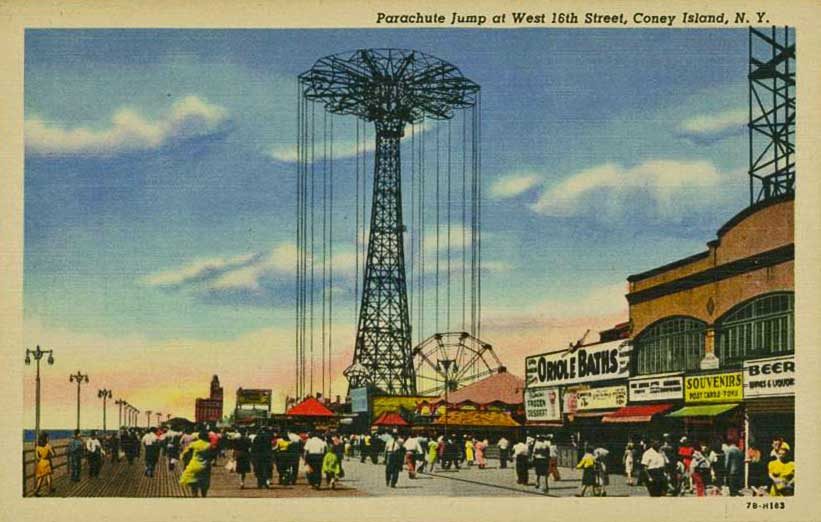
Coney Island—the boardwalk mecca — at the last stop of the Sea Beach Express. The nonnas huff and puff and under their breath call out to the saints, as they drag grandchildren, ages 2 to 9, across the platform and down the subway stairs. Thus begins a day of fun in the sun in Brooklyn, 1947.
The kids are wearing shorts — bathing suits underneath — and the wicker of the subway seats has embossed the backs of their thighs with a cross-hatch pattern. The nonnas, too, are ready for the beach. They wear housedresses, seamed stockings rolled beneath their knees, black oxfords, and, in deference to the 89-degree temperature, no front aprons.
The nonnas push the kids along the boardwalk to keep them from making eye contact with vendors selling corn on the cob, hot dogs, and cotton candy, and with barkers touting skeet-ball games where players can win “a glass candy dish.” The kids barely take the first step off the boardwalk before they start complaining. “The sand is too hot, the sand’s in my shoes,” and on they go. The nonnas soothe them and end up carrying the youngest ones across the sand. They pick a spot that’s perfect for dashing into the ocean, but far enough away from the boardwalk so the kids won’t see “what goes on under there.”
Blanket spread out, towels pulled from shopping bags, coconut-scented suntan lotion applied, the kids, except for the babies, head for the water. Only one nonna, a sentry, must stand guard at the water’s edge. She doesn’t know how to swim, she wears her oxfords, and she holds a two-year-old, but her eyes never leave the kids playing a foot away from her. And if she suspects danger, her voice can carry over the waves all the way to Brighton Beach. Every few minutes, she bends down, cups some water in her hand and spreads it over the baby’s face, hands, and neck, secretly pleased when some drops fall on her now too-hot housedress.
It’s time for the changing of the guard. Another nonna, shoes on, babe in arms, takes over and repeats the saltwater almost-baptismal ritual.
The kids, lively and hungry, return to the blanket. They want to eat quickly so they can begin to observe the nonnas’ rule: No swimming until an hour after eating. From her shopping bag, each nonna takes a thermos of lemonade and brown lunch bags filled with sandwiches.
The nonnas have been in this war together: herding kids, applying their suntan lotion, and watching them swim. But now, a nonna who would have given her life for another nonna’s grandkid has become the enemy. The battlefield: the blanket. The spoils: the lunch sandwiches.
“What did you bring today?” one asks
“Frittata sandwiches,” the other answers. “How about you?”
“I made peanut better and jelly on American bread.”
The other nonna raises her eyebrows as if to ask, “What kind of sandwich is that?”
A detente is reached as the nonnas watch the kids, their lips still salty from a frittata feast, devour PB&Js.
Contentedly, the PB&J nonna lies on the blanket. “I think I take a little rest now,” she says.
Potatoes and Eggs or Potato Frittata
Makes six sandwiches
- 1/4 cup olive oil
- 4 baking potatoes, well scrubbed, thinly sliced, dried
- Salt to taste
- 8 eggs, beaten just to blend
- Pinch of salt
- 6 Italian or Sicilian round rolls
- Preheat broiler.
- In an ovenproof skillet, heat olive oil.
- Gently place potatoes in oil; reduce heat to medium.
- Toss potatoes with a spatula; fry until golden; sprinkle with salt.
- Pour eggs, beaten with a pinch of salt, over potatoes; rotating pan so eggs cover all.
- Lift edges of omelet as eggs cook so raw eggs flow to bottom of pan
- When omelet is almost set; place under broiler. Watch carefully; broil until golden brown and puffed.
- Serve warm or at room temperature as a main dish or slice omelet in six pieces and fill rolls.