Preserving the Past
With the recipe for Coconut Jelly Layer Cake.
It’s a morning at the end of August. Nonnas lucky enough to have a grape arbor lush with filled-to—bursting concord grapes pluck the bunches by the stem and deposit them in bushel baskets. Other nonnas wait at the fruit stand for workers to unload crates of oozing grapes from a wooden-sided truck. Unlucky grandsons carry the crates home.
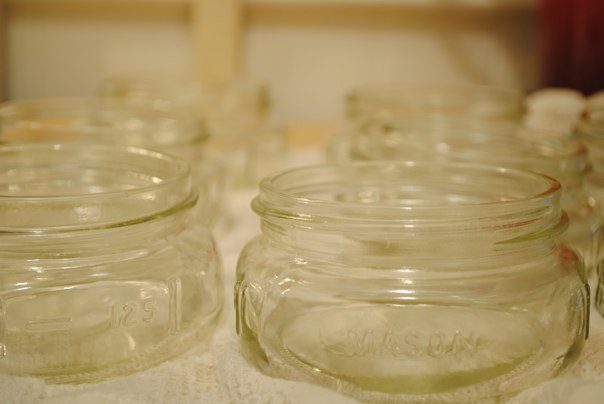
After they deposit all the grapes in one apartment, they take off for the grocery store to pick up bottles of pectin. Then it’s off to the hardware store, where they buy preserving jars, sealing wax, funnels, and lengths of cheesecloth. They return to the apartment where bushels and crates of grapes cover every kitchen chair and part of the floor, with a crateful in the sink awaiting a first wash.
Each ties a scarf—a kerchief— around her head, dons an immaculate front apron, scrubs her hands and arms as though preparing to perform surgery, and is ready for an afternoon of washing, simmering, sugaring, and “putting up” the grape jelly to carry her through the winter. The nonnas all have the same mission today so they end up treating one another less like squabbling sisters-in-law, as they usually do, and more like sisters.
The radio is tuned to Donna Lidia offering advice on cheating spouses, complaining mothers-in-law, and of course, ungrateful children. They work in silence so they are sure to catch every solution to every problem. All that they can hear above the sound of Lidia’s voice is the cold water running over dozens of bunches of grapes. (See Piecework.)
When the program ends, they all start to talk at once. “Rinse the cheesecloth.” one says.
“Get the big white enamel pot.”
“Measure the sugar.” It’ s the once-a-year day when the nonnas actually measure ingredients—and the weights are in pounds —to fill the twelve-quart pot.
Simmering the grapes, skimming the froth that rises, adding the pectin, straining the contents through cheesecloth, filling the jars, melting the wax for topping the jars takes hours. To pass the time, the nonnas reminisce. Nonnas from the old country remind the others that they have a monopoly on sadness because they left Italy for Brooklyn when they were 14 years old, never to see their mothers again. The others make soothing noises all around.
A knock on the door interrupts their tales. Three teenage granddaughters, water spotting their dungarees and plaid cotton shirts from their recent visit to the local pool, pile into the house. A nonna shoos them to the back of the apartment away from the sanitized site of the preserve-making.
As the girls leave the kitchen, one of them makes a request of her nonna. “Okay, when the jelly is ready, you got to bake the jelly and coconut cake.”
The abashed nonna makes the American cake in secret. She is red-faced as the others begin to ask about the cake. “I learned to make it from my daughteer,” she says.
“Where did she get the recipe—from a ladies’ magazine?” one asks suspiciously.
“I never asked her, but the kids all love it, and so what if it’s American?”
“She’s right. We’ve been here long enough to start making American food. It’s not like we’re going home again.”
“I have a secret when I make it anyway. I don’t use any American white cake. I make it with pan di espagna. And nobody knows the difference.”
“Of course,” they all chorus their approval. “Make one for our Rosary Society meeting next week.”
“You can fool the Irish priest by serving him what he thinks is a real American cake.”
Coconut Jelly Layer Cake
Serves eight
Pan Di Spagna
- 4 large eggs, separated
- 3/4 cup sugar, divided
- 1 teaspoon vanilla extract
- Pinch salt
- 1/2 cup unbleached, all-purpose flour
- 1/2 cup cornstarch
- 1 tablespoon butter for coating pan
- Preheat oven to 350 degrees F.
- Butter a 9 or 10-inch , 2-inch deep baking pan; line bottom of pan with waxed paper.
- In a medium mixing bowl, whisk the yolks with the vanilla extract.
- Whisk in half the sugar and continue to beat until very light and frothy, about 5 minutes.
- Combine the flour and cornstarch and sift once to aerate.
- In a clean, dry bowl beat the egg whites with the salt until they hold a very soft peak.
- Beating faster, add remaining sugar in a slow stream; beat until egg whites hold a firm peak.
- Fold the yolks into the whites.
- Sift the flour and cornstarch over the eggs in 3 portions, folding them in gradually.
- Do not overmix batter.
- Pour the batter into the buttered and paper-lined pan; smooth the top.
- Bake 30 to 40 minutes, or until it feels firm when pressed with the palm of the hand.
- Immediately loosen the cake from the side of the pan with a small knife or spatula.
- Invert the cake and leave the paper stuck to it.
- Turn the cake right-side up and cool it on a rack.
Frosting
- 1 cup best quality grape jelly
- 2 cups sweetened, shredded coconut
Assembling layer cake
- When cake is cooled completely, slice horizontally into 2 layers
- Spread jelly over tops and sides of each layer.
- Stack layers.
- Sprinkle cake generously on top and sides with coconut.